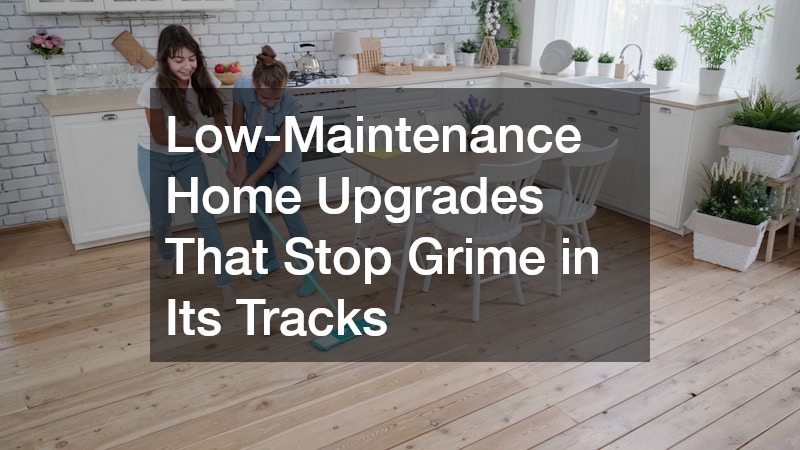
For many homeowners, cleaning feels like a losing battle against an unrelenting enemy. After a weekend of scrubbing, dusting, and vacuuming, a layer of film and residue often reappears. Standard home design choices are flawed; finishes, crevices, materials, and mechanical systems trap dirt and particulates. When your space harbors debris, no amount of elbow grease offers a permanent solution. The secret to a low-maintenance home is a shift in perspective. Instead of harsher cleaning routines, alter the environment. Focus on designing smarter to implement a structural defense against dirt.
The High-Traffic Zone: Mudrooms and Entryways
The vast majority of the soil, sand, and particulate pollutants found deep inside your home did not originate there; it was carried in on the bottoms of shoes, the paws of pets, and the clothing of family members. Once outdoor debris crosses the threshold, it quickly fragments and disperses into your carpets and indoor air currents. Therefore, the first line of defense in an active grime-prevention strategy is creating an airtight “cleanroom” decompression zone right at your primary entry points. By trapping outdoor debris within the first few feet of your home, you protect the remainder of your interior spaces from tracking damage.
An effective mudroom strategy requires a dual approach: catching heavy debris and ensuring that whatever escapes the initial trap lands on an impervious, easily sanitized surface. Consider implementing these targeted upgrades:
- Flush Walk-Off Containment Mats: Instead of throw rugs that slide around and quickly saturate with dirt, install a recessed walk-off mat system that sits flush with the surrounding floor. These commercial-grade grids allow heavy soil and sand to fall beneath the walking surface into a containment well, preventing subsequent foot traffic from grinding the dirt further into the house.
- Integrated Boot-Washing Stations: For busy families and pet owners, a small walk-in wash station built directly into the entryway wall is a game-changer. Equipped with a flexible pull-out sprayer, a heavy-duty mud drain, and water-resistant surround walls, it allows you to wash down muddy boots, rain gear, and dog paws before they ever touch your interior living zones.
Beyond the immediate entryway mat, the flooring material you choose for your high-traffic zones will dictate how much daily sweeping you are forced to endure. Traditional flooring substrates often feature deep textures or flexible joints that collect fine dust. Upgrading this zone through professional floor installations that utilize ultra-smooth, non-porous luxury vinyl plank or large-format porcelain tile creates a completely flat plain. When selecting your materials, look for finishes treated with an anti-static topcoat. This specialized layer prevents fine dust and pet hair from magnetically clinging to the floor, allowing a simple microfiber dry mop to collect every particle in a single pass without the need for intense scrubbing.
Culinary Cleanliness: The Low-Maintenance Kitchen

Kitchens are arguably the most difficult rooms in a house to keep clean because they suffer from a unique and highly destructive combination of moisture, solid food debris, and airborne vaporized grease. When fine cooking grease escapes a pan, it rises into the air and eventually settles onto nearby surfaces. If those surfaces are textured or difficult to reach, that grease acts as a permanent adhesive, catching every stray speck of dust and forming a thick, sticky layer of grime that is incredibly difficult to remove without harsh chemical degreasers.
Eliminating this phenomenon requires a design that prioritizes flat planes and sealed junctions. Standard kitchen layouts are riddled with tiny gaps, such as the sliver of space between a slide-in range and the countertop, or the recessed crevice where a traditional cabinet door meets its frame. These spaces act as absolute magnets for crumbs and grease. During a comprehensive kitchen remodeling project, you can structurally eliminate these problem areas by specifying flush-mount or integrated appliances that sit perfectly even with your countertops, creating an unbroken surface that can be wiped clean in seconds.
To truly optimize a culinary space for low maintenance, look toward the cabinetry and the wall surfaces behind your cooking zones. Consider these high-impact upgrades:
- Ceiling-Height Flat-Panel Cabinets: Standard upper cabinets leave a six-to-twelve-inch gap below the ceiling. This hidden ledge becomes a massive repository for sticky grease-dust. By working with custom cabinet companies to build your storage all the way up to the ceiling line, you remove this inaccessible horizontal surface entirely, while significantly increasing your usable storage capacity.
- Slab Backsplashes: While classic subway tile looks appealing when new, it introduces miles of porous grout lines directly behind your primary cooking zones. Replacing individual tiles with a single, continuous sheet of engineered quartz, porcelain slab, or back-painted glass completely eliminates grout joints. Grease can be easily wiped away from a smooth slab without any scrubbing.
- Enclosed Built-In Pantries: Open shelving looks beautiful in design magazines, but in a real working kitchen, it leaves your everyday dishes, glassware, and spices exposed to airborne grease. Storing your kitchenware behind solid, flat-panel cabinet doors ensures everything stays completely dust-free between uses.
The Self-Cleaning Sanctuary: Bathrooms Without the Scrubbing
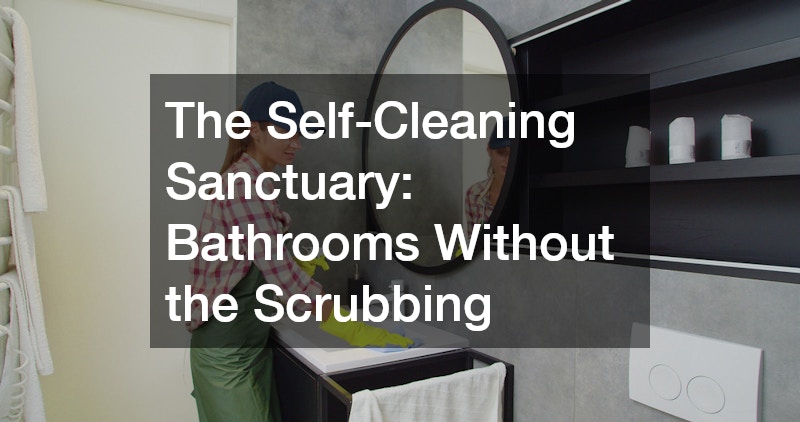
Bathrooms are subjected to near-constant high humidity, which creates a prime breeding ground for mold, mildew, and bacterial biofilm. The traditional construction model for a bathroom relies heavily on small tiles, porous grout, and heavy tracks for glass shower doors. Over time, as hot water and soap scum interact with these materials, the sealants degrade, and mold spores take root deep within the porous surfaces. Once mold embeds itself into standard cement grout, it becomes nearly impossible to eradicate without damaging the underlying structure, requiring professional tile grout cleaning.
The modern solution to this problem is to design a space that naturally sheds water and leaves nowhere for moisture to pool. This means moving away from traditional mosaic tiles and looking toward continuous, large-format materials. When homeowners consult with professional bath remodelers, the most effective upgrade they can request is the installation of solid-surface wall panels for the shower surround. Materials like solid quartz sheets, thick acrylic panels, or porcelain slab walls eliminate tile joints entirely. Without thousands of tiny grout lines to collect soap scum and human skin cells, mold and mildew lose their primary food source and cannot colonize your walls.
Furthermore, minor hardware details can have a massive impact on your daily cleaning workload. Implementing a few specific plumbing and structural shifts will keep your bathroom pristine:
- Hydrophobic Frameless Glass: Traditional sliding shower doors feature thick aluminum bottom tracks that hold standing water, hair, and soap residue. Upgrading to a single, frameless heavy glass panel completely eliminates these tracks. Ensure the glass is treated with a permanent hydrophobic, oleophobic coating, which forces water and oils to bead up and slide off instantly, preventing the formation of cloudy hard water spots.
- Wall-Mounted Floating Fixtures: Standard toilets and vanities sit directly on the floor, creating a complex perimeter of silicone caulk that eventually turns black and gathers hair. Switching to a wall-mounted toilet with an in-wall tank and a floating vanity opens up the entire floor. A mop or automated robotic vacuum can slide effortlessly beneath the fixtures, ensuring no hidden dirt zones exist.
- Automated Continuous-Run Ventilation: Moisture is the catalyst for bathroom grime. Upgrading to an ultra-quiet, humidity-sensing exhaust fan ensures that the moment moisture levels rise, the fan activates and remains running until the ambient air is completely dry, preventing spores from ever finding a foothold.
Invisible Shielding: Whole-Home Air and Climate Defense
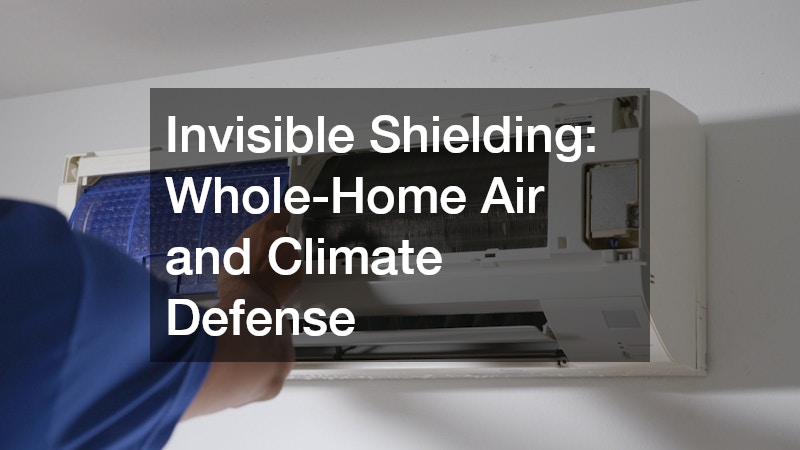
While modifying your floors and walls handles the dirt you can see, a substantial amount of household grime exists as microscopic airborne particles. Pet dander, dead skin flakes, outdoor pollen, dust mites, and fine soot float through the air until gravity pulls them down onto your horizontal surfaces. If your home’s HVAC system is outdated or poorly sealed, it does not clean your air, it acts as a distribution network, continually blowing accumulated dust out of your registers and scattering it across every room in your house.
To transform your climate system into an active air purification machine, you must upgrade both the machinery that conditions the air and the filtration systems attached to it. Scheduling a modern air conditioning installation that utilizes a variable-speed air handler is highly effective. Unlike traditional systems that turn completely on and off in loud, violent bursts, a variable-speed system runs almost continuously at a very low, energy-efficient speed. This constant, gentle circulation means that the air in your home is being perpetually drawn through your filtration media, trapping dust particles before they ever get the chance to settle onto your furniture or floors.
To maximize this continuous air movement, complement the system with advanced filtration and structural maintenance upgrades:
- High-Efficiency Media Filter Boxes: Standard one-inch fiberglass filters are only designed to protect the internal coils of your HVAC equipment from large debris; they do absolutely nothing to stop fine house dust. Work with a certified furnace installer to upgrade your system with a deep, four-to-five-inch media filter cabinet capable of housing a MERV 13 or higher rated filter, which easily traps microscopic allergens, pet dander, and fine dust.
- Internal Aerosol Duct Sealing: Even the best filter is useless if your ductwork has leaks. Small gaps in attic or crawlspace ducts create a negative pressure siphon, sucking dirty, unconditioned insulation dust into your air stream. Utilizing an advanced aerosolized sealant coats the inside of your duct network, automatically plugging every microscopic gap from the inside out.
Once your mechanical systems are upgraded, you must address the historical debris already residing within your air infrastructure. Over decades, old metal ducts accumulate thick blankets of dust and organic matter. Investing in professional air duct cleaning services clears out these legacy reserves using high-powered negative pressure vacuums and rotating whips. This deep purification ensures that your newly installed high-efficiency climate systems are starting with a completely clean slate, rather than pushing old dust back into your newly remodeled living spaces.
Below the Surface and Beyond the Glass: Foundations and Windows
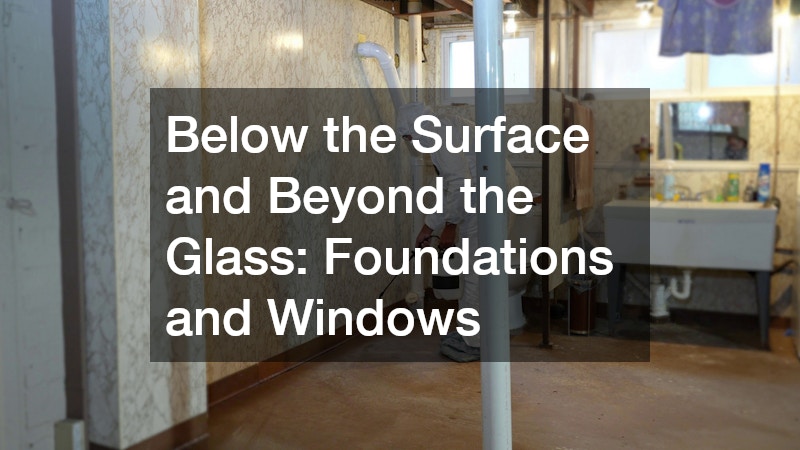
When tackling household grime, it is easy to focus exclusively on the main living areas while ignoring the peripheral spaces that feed dirt into your home. The basement and your windows are two massive entry points for structural dirt. Basements are inherently humid and prone to concrete deterioration, while windows are the sole barrier keeping outdoor soot, highway dust, and seasonal pollen from breaching your perimeter.
Unfinished or poorly finished basements are major contributors to overall house dust due to a process known as concrete chalking. As raw concrete breathes and handles hydrostatic pressure from the earth, it continuously sheds microscopic crystalline silica dust. This fine white powder is caught in upward air currents and pulled directly into the upper floors of your home. To halt this cycle, engaging professional basement remodeling services to encapsulate your lower level is incredibly beneficial. By properly sealing the concrete walls with heavy vapor barriers, applying high-solids epoxy coatings to the floors, and utilizing closed-cell spray foam insulation, you permanently lock down concrete dust and eliminate the musty odors that migrate upstairs.
Simultaneously, your windows require close attention. Old, single-pane windows or double-hung windows with worn-out felt weatherstripping are highly vulnerable to air infiltration. When the wind blows outside, fine outdoor dust and exhaust particulates are forced through these degraded seals, leaving a visible line of black soot along your window sills. Consider these strategic window upgrades to reinforce your home’s exterior envelope:
- Casement and Awning Style Configurations: Traditional double-hung windows slide up and down, relying on flexible brush seals that degrade quickly. Casement windows, which crank outward, feature a compression seal that pinches tightly against the frame when closed, creating an absolute barrier against wind-driven dust and seasonal pollen.
- Warm-Edge Spacer Multi-Pane Glass: Investing in modern window replacements that feature dual- or triple-pane glass with advanced warm-edge spacers keeps the interior glass surface warm. This minimizes localized condensation, which prevents airborne dust from sticking to the glass and forming a muddy film that ruins your view.
- Tilt-In Cleaning Mechanisms: If windows are difficult to clean, they remain dirty, accumulating thick layers of external grime that eventually transfer onto your window screens and blow indoors when opened. Upgrading to windows with tilt-in sashes allows you to clean the exterior glass effortlessly from the safety of your living room, keeping the outer perimeter pristine.
Transforming your home into a low-maintenance, grime-resistant environment is not about discovering a magical cleaning product or committing to endless labor. It’s about deliberate design. Replace porous materials with seamless alternatives, eliminate unreachable gaps, and upgrade ventilation systems to scrub the air. This changes the physical rules of your living space. These upgrades require an upfront investment, but the long-term return is undeniable. You’ll reduce the cost of cleaning chemicals, equipment, and mold remediation services. More importantly, you reclaim time. Instead of spending weekends on exhausting cleaning cycles, you can relax in a healthy, allergen-free environment that maintains its cleanliness. Designing out the dirt allows you to enjoy your space without managing grime.