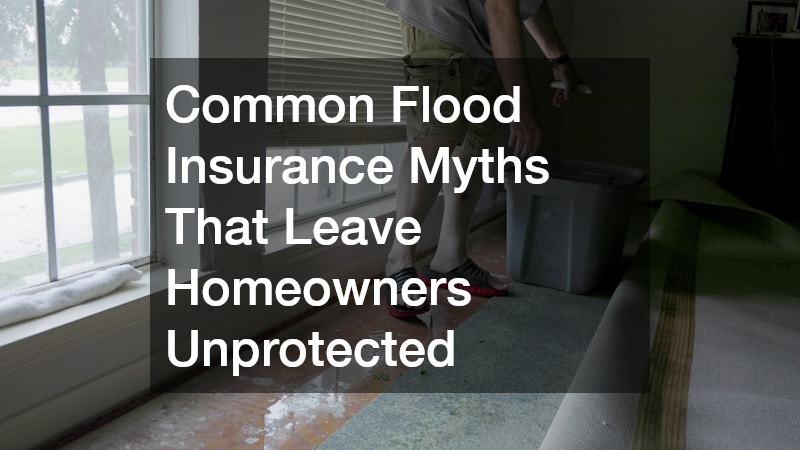
Flooding is one of the most common and costly natural disasters, yet many homeowners remain dangerously underinsured due to widespread misconceptions about coverage. These misunderstandings often come to light only after significant damage has already occurred. By examining the most common myths surrounding flood-related coverage, homeowners can better understand their actual risk exposure and make informed decisions to protect their property and finances.
Do Homeowners Insurance Policies Cover Flood Damage?
A frequent and costly misconception is that standard homeowners insurance policies cover flood damage. In reality, most homeowners policies protect against events such as fire, wind, hail, and certain types of water damage, but explicitly exclude flooding.
This exclusion applies even when water damage is severe and sudden. Water damage covered by homeowners insurance typically involves internal issues, such as burst pipes or appliance failures. External water intrusion caused by rising water levels, storm surge, or surface runoff falls outside standard coverage. Assuming otherwise can leave homeowners financially exposed after a flood event.
Insurance providers use a specific definition of “flood” that differs from how the term is commonly used. In insurance terms, a flood generally involves water that inundates normally dry land and affects multiple properties. This can include overflow from rivers, heavy rainfall accumulation, storm surge, or rapid snowmelt. This distinction is critical. For example, water entering a home due to poor drainage or overwhelmed storm systems may still qualify as a flood under insurance definitions. Understanding how insurers classify flood events helps homeowners avoid false assumptions about what their policies will cover.
Many homeowners only discover coverage gaps after filing a claim. For instance, a homeowner may experience basement flooding following days of heavy rain and assume their insurance will cover repairs. When the claim is denied due to the flood exclusion, the financial burden falls entirely on the homeowner. In another common scenario, homeowners affected by storm surge during a hurricane may find that wind damage is covered, but water damage from rising tides is not. These examples highlight the risks of relying on assumptions rather than reviewing policy details carefully.
Are Flood Insurance Policies Only Necessary for High-Risk Areas?
Another pervasive myth is that only homes in designated high-risk flood zones need flood-related coverage. While properties in these areas are statistically more likely to flood, a significant percentage of flood claims come from moderate- or low-risk zones. Flood maps are based on historical data and cannot account for every variable, such as new development, changing drainage patterns, or unexpected weather events. Homes outside high-risk zones are not immune to flooding, and assuming otherwise can create a false sense of security.
Weather patterns are becoming increasingly unpredictable, with more frequent heavy rainfall events occurring in areas not historically prone to flooding. Urbanization and land development further exacerbate runoff and drainage challenges, increasing flood risk in previously unaffected neighborhoods. As these conditions evolve, reliance on outdated risk classifications becomes less reliable. Homeowners who reassess their risk in light of changing environmental factors are better positioned to protect their property.
The financial impact of flood damage can be devastating. Repairs often involve structural drying, mold remediation, flooring replacement, and electrical system repairs. Without proper coverage, these costs can quickly reach tens of thousands of dollars. Even a few inches of water can cause extensive damage. Homeowners without flood insurance may be forced to rely on personal savings, loans, or incomplete assistance programs to recover.
Is Flood Insurance an Unnecessary Expense?
Some homeowners view flood insurance as an unnecessary expense, especially if they have never experienced flooding. However, the cost of premiums is often modest compared to the potential financial losses associated with flood damage. When evaluated as a risk management tool, flood insurance provides financial predictability in an otherwise uncertain situation. The ability to transfer catastrophic risk to an insurer can protect long-term financial
Another misconception is that government disaster assistance will cover flood-related losses. In reality, such assistance is limited, often takes time to process, and may come in the form of loans rather than grants. Not all flood events qualify for federal aid, and eligibility requirements can be strict. Relying solely on government assistance leaves homeowners vulnerable to significant out-of-pocket expenses. Insurance coverage offers a more reliable and timely source of financial recovery.
Premiums for flood insurance vary based on factors such as location, elevation, and property characteristics. While high-risk zones typically face higher premiums, many homeowners in lower-risk areas can obtain coverage at relatively affordable rates. Understanding how premiums are calculated helps dispel the belief that flood insurance is universally expensive. For many homeowners, the cost is manageable and proportional to the level of risk.
Misunderstandings about flood insurance continue to leave homeowners exposed to substantial financial risk. Believing that homeowners insurance covers flooding, assuming only high-risk areas are affected, or relying on government assistance are myths that can have serious consequences. By educating themselves on how flood risks are defined and covered, homeowners can make informed decisions that align with their actual exposure. Proactive evaluation of coverage options is a critical step toward ensuring long-term protection and peace of mind.