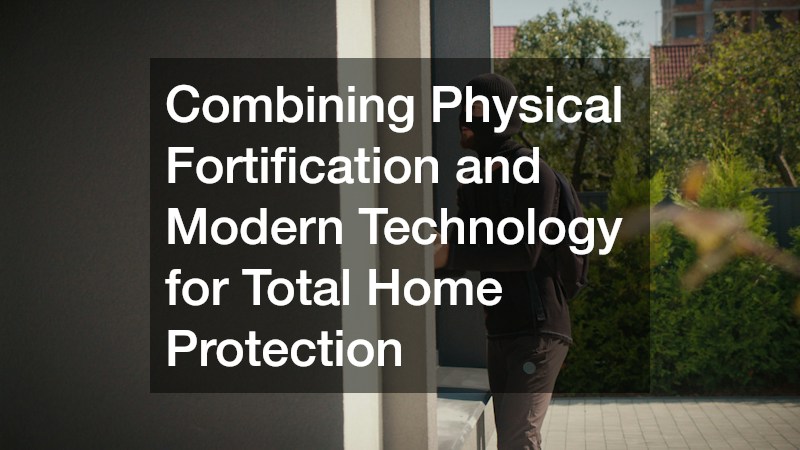
The modern home security landscape has undergone a massive technological shift over the past decade. The widespread adoption of wireless Wi-Fi cameras, smart video doorbells, automated door locks, and smartphone-controlled security platforms has given homeowners unprecedented real-time insight into their properties. With a single tap on a screen, you can check live camera feeds, lock a deadbolt from miles away, or receive an immediate mobile alert the second motion is detected on your front porch.
However, this reliance on digital convenience has created a dangerous misconception: the belief that visibility is synonymous with protection. Electronic surveillance systems are inherently passive monitoring tools—they record events, emit audible alarms, and send notifications, but they cannot physically block an intruder from forcing open a door or breaking a glass window. A smartphone alert notifying you that a rear entry door has been breached is only useful if the physical structure of that door delays the intruder long enough for law enforcement or security dispatch teams to arrive.
True, unshakeable residential defense requires bridging the gap between digital early-warning systems and physical structural engineering. This multi-layered approach relies on three core security principles:
-
Deterrence (Outer Perimeter): Stopping a potential threat before it reaches your home by establishing deep-set boundary fences, eliminating blind spots through strategic landscaping, and installing motion-activated lighting that exposes movement.
-
Delay (Physical Shell): Utilizing heavy-duty physical barriers—such as Grade 1 deadbolts, reinforced door jambs, solid-core doors, and impact-resistant glass—that require immense physical force, time, and noise to breach.
-
Detection (Electronic Matrix): Deploying smart sensors, video analytics, and monitored alarm networks backed up by uninterruptible power supplies to ensure continuous visibility even during power grid failures.
When physical fortification and smart technology operate as a single unified matrix, your home transforms from a vulnerable target into a resilient sanctuary. Physical barriers provide the vital physical resistance needed to keep intruders out, while electronic surveillance gives your family early warnings and ensures immediate emergency dispatch when every second counts.
Hardening the Outer Perimeter and Property Boundaries

The outermost edge of your property serves as your very first line of defense. Establishing clear physical boundaries deters trespassers early, makes unauthorized entry obvious to neighbors, and eliminates hidden approach routes long before an intruder ever reaches your front porch.
Establish Clear Sightlines and Sturdy Boundary Barriers
A well-defined perimeter creates psychological and physical deterrence. Solid wood privacy fences, ornamental steel pickets, or high chain-link barriers make quick access difficult, forcing intruders to climb in plain sight rather than walking straight onto your lawn. You can further enhance this boundary by maintaining open lines of sight across your yard—trimming low-hanging tree branches above seven feet and keeping perimeter shrubs sculpted below three feet to deprive intruders of hiding spots near ground-level windows. Integrating motion-activated floodlights along these boundaries instantly exposes unwanted movement, ensuring that your property lines remain bright and well-monitored. Partnering with professional fence contractors ensures that boundary posts are set deep in concrete, creating a durable physical barrier that withstands both physical force and harsh weather.
Seal Exterior Foundation Gaps and Prevent Structural Infiltration
Protecting your outer boundary also means securing low-level structural access points against non-human threats, burrowing pests, and hidden entry routes around crawlspaces or outbuildings. Reinforce exterior crawlspace doors with heavy-duty latches and padlocks to prevent unauthorized entry beneath your living quarters, and install heavy-gauge stainless steel mesh over all foundation ventilation gaps to block burrowing animals from damaging floor joists and utility wiring. Uncontrolled pest activity under decks or inside crawlspaces can degrade structural timber and compromise foundation integrity over time. Scheduling routine inspections with certified pest control specialists keeps your home’s lower structural envelope sealed against pests that can chew through insulation, wiring, and timber.
Securing Primary Doors, Windows, and Entry Hardware
Once an intruder bypasses the yard, primary entry points become the critical battleground. Standard builder-grade doors and locks are notoriously easy to breach with basic physical force unless properly reinforced with heavy-duty hardware.
Upgrade Mechanical Deadbolts and High-Security Locksets
A sturdy door is completely useless if the locking mechanism gives way under impact. Standard deadbolts often utilize short throw bolts and soft brass strike plates that fail after a single heavy kick. Upgrade your primary exterior doors with Grade 1 certified deadbolts featuring solid steel internal components and hardened steel throw bolts that resist saw blades. To prevent the entire door jamb from splitting under force, replace standard three-quarter-inch strike plate screws with three-inch hardened steel screws that anchor deep into the structural wall studs behind the frame. Consulting experienced local locksmiths allows you to audit existing entry hardware, rekey mismatched cylinders, and install drill-resistant, pick-proof locksets across all exterior entry points.
Integrate Smart Access Control with Heavy-Duty Door Frames
Physical reinforcement works best when paired with modern electronic monitoring, giving you full visibility over who enters and exits your home. Pair reinforced solid wood or insulated steel doors with encrypted electronic keypads, allowing keyless entry via secure PIN codes or mobile apps. You can bolster this setup by mounting smart video doorbells at primary entrances to capture motion-triggered footage and enable two-way audio communication with visitors. Connecting magnetic contact sensors to your door frames ensures that an audible alarm triggers and alerts emergency responders instantly if a door is opened unexpectedly. Contracting professional security services ensures your door contact sensors, motion detectors, and camera feeds are monitored around the clock by certified dispatch teams.
Protecting Upper Levels, Rooflines, and Attic Entry Points
Homeowners often focus all their security budget on ground-floor doors while completely neglecting upper-level entry routes. Intruders frequently exploit low rooflines, porch overhangs, and overhanging tree branches to access second-story windows or attic vents.
Secure Roof Openings and Vulnerable Upper Access Points
Upper-story windows and skylights are frequently left unlocked under the assumption that they are out of reach, making them prime targets for experienced intruders. Keep upper-level windows locked year-round, or install key-operated window locks and sash limiters that prevent windows from opening wider than four inches. For skylights, install impact-resistant glass or internal steel security bars to prevent someone from breaking through roof openings. It is equally important to cut back large tree limbs within eight to ten feet of your roof so intruders cannot use branches as elevated walkways onto upper balconies. Scheduling comprehensive roof inspections allows technicians to check upper flashing, inspect skylight frame integrity, and ensure that roof access hatches are securely latched from the inside.
Strengthen Attic Spaces and Concealed Thermal Cavities
Attic spaces spanning attached garages and main living areas can serve as hidden pathways for intruders or fires if left unmonitored and improperly insulated. Ensure the access panel between your garage and main attic features a fire-rated, solid-core door equipped with a physical latch lock. To catch unauthorized entry early, mount battery-powered motion or temperature sensors in unconditioned attic spaces. Gaps around attic access hatches and ceiling recessed lights also allow heat loss while creating hidden voids where dust and debris accumulate. Hiring professional insulation contractors ensures that your ceiling cavities receive dense-grade thermal insulation while sealing off structural voids to maintain fire safety and thermal efficiency.
Powering Security Systems and Protecting Critical Utilities
Modern electronic security relies heavily on electricity and internet connectivity. Safeguarding your power feeds and main utility connections ensures your security network remains fully operational during storms or intentional tampering.
Safeguard Electrical Panels and Backup Power Infrastructure
An experienced burglar may attempt to cut main power or internet lines before entering a home, disabling unbacked cameras and alarms instantly. Place heavy-duty padlocks on outdoor main breaker panels to prevent unauthorized individuals from flipping your main power switches. To maintain continuous security during grid disruptions, plug Wi-Fi routers, security hubs, and camera recording drives into uninterruptible power supply (UPS) batteries. Installing a whole-home standby generator ensures that critical home circuits, security cameras, exterior lighting, and refrigeration remain powered through extended outages. Working with a licensed electrical service guarantees that backup generator transfer switches, surge protectors, and outdoor electrical subpanels are installed safely and meet local electrical codes.
Incorporate Security Specs into Ground-Up Property Construction
If you are building a new home, embedding security infrastructure directly into the structural design yields the highest level of physical protection. Burying electrical, telephone, and fiber-optic cables underground directly from the street prevents exposed wires from being cut from the exterior. During wall framing, run concealed Power-over-Ethernet (PoE) cables inside wall cavities before drywall installation to create tamper-proof camera feeds. You can also frame an interior closet or storage room with reinforced concrete walls and a steel security door during initial framing to serve as a built-in safe room. Partnering with a certified home building service allows you to integrate concealed conduit networks, reinforced wall framing, and smart home hubs seamlessly into your initial architectural blueprints.
Integrating Security Features into Whole-Home Renovations
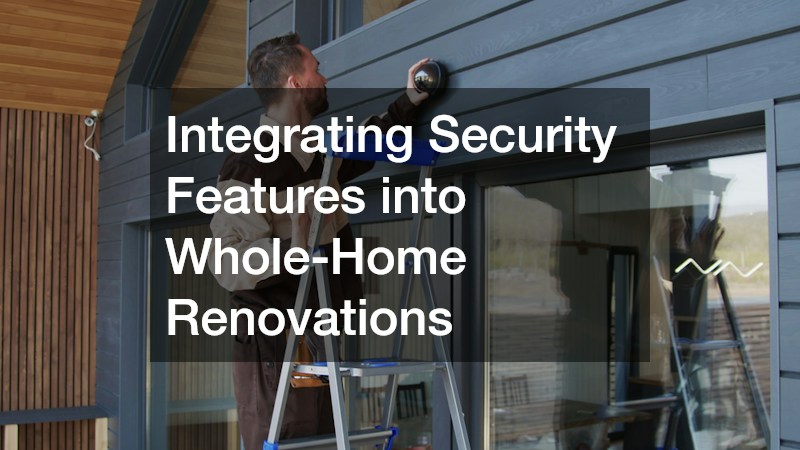
A major home remodeling project provides the perfect opportunity to upgrade physical security, conceal wiring, and install high-security fixtures without disrupting finished interiors.
Conceal Wiring and Modernize Safe Rooms During Renovation
Renovating living rooms, kitchens, or master suites allows you to upgrade structural protection behind your walls while modernizing your home’s aesthetic appeal. Replace hollow-core interior doors on master bedrooms or walk-in closets with solid-core wood or steel doors equipped with heavy-duty deadbolts to create an instant safe room. During cabinetry or wall framing updates, hide network video recorders (NVRs) and smart home control panels inside flush-mounted wall cabinets behind art pieces or custom millwork. Replacing standard window panes with double-pane laminated glass provides impact resistance that blocks forced entry attempts. Utilizing comprehensive home remodeling services allows you to blend physical reinforcement directly into your custom interior design plans.
Manage Structural Subcontractors for Cohesive Home Defense
Executing a whole-home security upgrade requires coordinating multiple specialty trade workers to ensure that framing, hardware, electrical wiring, and locks function as one cohesive system. Start by establishing a detailed blueprint specifying Grade 1 locking hardware, solid-core doors, security wiring locations, and exterior lighting layouts for all contractors involved. Inspecting low-voltage security wiring, door frame reinforcers, and conduit runs before insulation and drywall are installed prevents costly teardowns later. Working with a single project director who manages schedules, verifies building code compliance, and checks off all safety requirements ensures smooth execution. Managing a major security remodel through experienced general contractors ensures that framing, electrical, roofing, and locking specialists execute their jobs efficiently and on budget.
Creating an Unshakeable Home Sanctuary
Achieving total home protection is not about choosing between physical hardware and smart technology—it is about combining them into a unified defense strategy. High-security locks, reinforced door frames, and sturdy perimeter boundaries provide the physical resistance necessary to stop intrusions, while smart cameras, motion sensors, and automated lighting give you early warnings and constant visibility.
Achieving true, unshakeable home protection is never a matter of choosing between physical hardware and smart technology. Rather, real residential security exists at the intersection of both. High-security locks, reinforced door frames, heavy-duty deadbolts, and sturdy perimeter boundaries provide the physical resistance necessary to stop forced entries in their tracks. Simultaneously, smart video cameras, wireless motion sensors, automated lighting, and 24/7 alarm monitoring provide the early warnings, constant visibility, and immediate emergency dispatch that keep your family one step ahead of potential threats.
When you treat home defense as a unified system—where physical delay mechanisms buy time for electronic detection networks to alert authorities—you eliminate the critical single points of failure that burglars exploit. A smart camera might catch a trespasser on video, but a Grade 1 deadbolt anchored deep into structural wall studs keeps them on the outside. Conversely, a strong door can resist physical impact, but integrated entry sensors ensure an audible alarm sounds the second a breach is attempted. By combining these layers, you transform your home into a formidable, resilient sanctuary.
To begin building a comprehensive, multi-layered security plan for your property, follow this step-by-step diagnostic roadmap. Inspect every exterior door, strike plate, and window latch. Replace short three-quarter-inch strike plate screws with three-inch hardened steel screws that anchor directly into the wall studs, and upgrade builder-grade locksets with drill-resistant, pick-proof Grade 1 deadbolts. Trim overgrown tree branches and dense bushes that block sightlines near ground-floor windows. Ensure high perimeter fencing is securely anchored and install bright, motion-activated LED floodlights along dark walkways and side yards. Secure your main electrical breaker box with a heavy-duty outdoor padlock to prevent utility tampering. Plug your primary Wi-Fi router, security hubs, and camera recording drives into uninterruptible power supply (UPS) battery units to guarantee continuous recording during power outages. Execute structural and technological upgrades methodically. Work alongside licensed locksmiths, general contractors, electricians, and security specialists to ensure your physical fortifications and electronic monitoring systems are installed to code and configured for complete, long-term peace of mind.