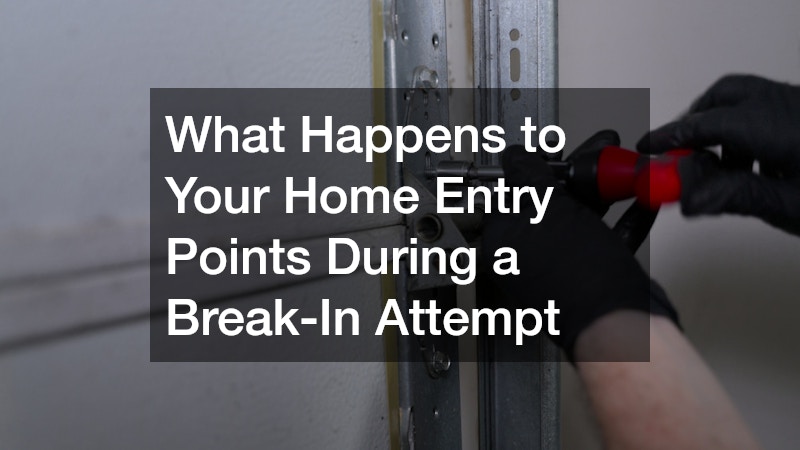
When someone tries to force their way into your home, the outcome often comes down to seconds and specific weak points that give way under pressure. Most homeowners never think about how their front door, windows, or garage actually hold up until a break-in attempt puts them to the test. Understanding what really happens to these entry points during an intrusion can help you spot vulnerabilities before a criminal does. This article walks through each major entry point, what fails first, and what upgrades genuinely make a difference.
Front Door Frames Splitting Under Force
The front door is the most common point of forced entry, and in most cases it is not the door itself that fails but the frame around it. A swift kick concentrates force on the strike plate area, and if the frame is only secured with short screws, the wood splinters and the door swings open in a single try. This is why professional door installations matter so much more than people realize, since a properly reinforced frame with long screws anchored into the wall stud can resist far more force than a standard builder-grade setup.
Many homeowners assume a solid door means a secure entry, but the frame and hardware are just as important as the slab itself. Reinforcement plates, heavy-duty hinges, and a properly fitted strike box all work together to distribute impact instead of letting it concentrate on one weak screw hole.
- Standard strike plates with one-inch screws often fail within one or two kicks
- Reinforced strike plates anchored into wall studs resist significantly more force
- Door frame material matters, with solid wood or metal-reinforced frames outperforming hollow builder-grade jambs
- Multi-point locking systems distribute pressure across the frame rather than one point

Window Glass and Frame Failure Points
Windows are often targeted because breaking glass feels faster and quieter to an intruder than dealing with a locked door, especially on ground-floor rooms hidden from street view. Standard single-pane glass shatters easily with minimal force, and older wooden frames can also crack or pull away from their tracks once the latch is bypassed. This is one of the biggest reasons homeowners look into window replacements, since newer options include laminated or tempered glass designed to hold together even after impact.
Beyond the glass itself, the latch mechanism is frequently the actual failure point rather than the pane. Cheap sash locks can be jimmied open with a flathead screwdriver in seconds, which means even a well-built window can be defeated by a low-quality lock.
- Laminated glass resists shattering better than standard annealed glass
- Reinforced frames prevent the entire window unit from being pried out
- Upgraded sash locks and pin locks add resistance against prying tools
- Ground-floor and basement windows deserve extra reinforcement priority
Sliding Glass Doors and Patio Entry Weaknesses
Sliding glass doors are notoriously easy to force open because many rely on a single latch rather than a full locking mechanism. A quick upward lift can pop older sliders right off their track, bypassing the lock entirely without breaking any glass. Adding a secondary bar or pin lock at the base of the track significantly reduces this vulnerability, and it is a low-cost fix that many homeowners overlook until after an attempted break-in.
The frame material and track condition also play a role in how well a sliding door holds up. Worn or bent tracks make it easier to lift or wiggle the door loose, so regular maintenance is just as important as the lock itself.
Garage Doors and Their Overlooked Vulnerabilities
Garages are frequently the weakest link in home security because the door itself is large, mechanically operated, and often overlooked in favor of front and back entry points. A damaged or misaligned garage door can leave gaps large enough to pry open, and outdated openers are vulnerable to signal-cloning devices that bypass the lock electronically. Scheduling garage door repair as soon as you notice slow response times, gaps at the base, or a struggling motor closes off an entry point that many burglars specifically look for.
Once inside a garage, intruders often gain direct access to the house through an interior door that is far less secure than the home’s main entrances. Reinforcing that interior connecting door with the same standards as a front door is a detail many homeowners miss entirely.
- Worn weather seals and bent tracks create physical gaps at the base of the door
- Outdated remote systems are vulnerable to code-grabbing devices
- Interior garage-to-house doors are frequently under-secured
- Battery backup and rolling code technology reduce electronic vulnerabilities
Back Doors and Secondary Entrances
Back doors and side entrances tend to receive far less attention than the front door, which is exactly why intruders often prefer them. These entry points are hidden from street view, giving someone more time to work at a lock or frame without being seen by neighbors or passersby. A fence, hedge, or attached garage often shields these spots even further, turning what should be a vulnerability into a private workspace for anyone determined to get inside.
Many homes still have older hardware on secondary doors and windows because homeowners upgrade the front entrance first and forget the rest of the perimeter needs the same level of protection. It’s common to find a reinforced deadbolt and smart lock up front, while the back door still relies on the original builder-grade knob lock that came with the house. Sliding glass doors are especially problematic, since many can be popped off their tracks or forced open with simple leverage tools in under a minute.
Matching Locks
A consistent standard across every entrance matters more than having one extremely secure front door and weak points everywhere else. That means matching deadbolt grades, reinforcing door frames, and installing strike plates with long screws on back doors just as you would up front. Sliding glass doors and doors leading to patios or garages deserve the same scrutiny, since these are often fitted with flimsy hardware that can be forced open in seconds.
Burglars actively look for the path of least resistance, so uneven security just shifts the risk to a different part of the house. A criminal casing a property will typically test multiple entry points before committing, and a solid front door only pushes the attempt toward the back. Fencing, motion-sensor lighting, and visibility from neighboring properties also factor into how appealing a secondary entrance looks, so closing those gaps is just as important as upgrading the hardware itself.
- Side and back doors often use lower-quality locks than the front entrance, sometimes just a basic doorknob lock without a deadbolt
- Many secondary doors have glass panels or windows near the handle, letting intruders reach in after breaking the glass
- Overgrown landscaping near secondary doors provides cover for intruders, letting them work unseen from the street or neighboring yards
- Motion-activated lighting reduces the appeal of poorly visible entry points by removing the darkness intruders rely on
- A 180-degree floodlight covering the full back walkway is more effective than a single dim porch fixture
- Consistent hardware quality across all entrances closes obvious gaps, so every exterior door should have a deadbolt with at least a one-inch throw
- Reinforcing the door frame with a strike plate and 3-inch screws matters as much as the lock itself, since frames often fail before locks do
Perimeter Fencing and Gate Weak Points
Before an intruder ever reaches a door or window, they often have to get past a fence or gate line, and how that perimeter holds up sets the tone for the rest of the attempt. A sagging gate or a fence with loose panels can be pushed open or climbed with minimal effort, which is why a proper residential fence installation makes a measurable difference in how much resistance a property presents. Height, material strength, and the condition of latches all factor into whether a fence actually slows someone down or just serves as a visual boundary.
Gates deserve particular attention since they are the moving part most likely to fail first. A well-planned fence install accounts for gate hardware just as much as panel strength, pairing a self-locking latch with sturdy hinges that hold up far better than basic consumer-grade hardware prone to being lifted off or forced open with a shoulder push.
- Fence height and material affect both visibility and climbing difficulty
- Loose posts or rotting wood panels are common failure points
- Self-latching gates prevent accidental or intentional easy access
- Sturdy hinges resist lifting and prying attempts
Electronic Monitoring and Real-Time Detection
What happens at your entry points during a break-in attempt often depends on whether anyone is watching in real time. Residential security cameras positioned at key entrances can capture the moment someone tests a lock or window, and modern systems send instant alerts to a homeowner’s phone so action can be taken immediately. Visible cameras also serve as a deterrent on their own, since most intruders prefer targets where they are unlikely to be recorded or identified.
Camera placement matters as much as having the devices installed in the first place. Covering blind spots like side gates, garage entries, and back doors closes gaps that a front-door-only setup would miss entirely, and pairing this coverage with proper gate installation along fence lines can prevent someone from slipping into those blind spots undetected in the first place.
- Entry-point cameras capture tampering attempts before a door or window fails
- Real-time alerts allow faster response from homeowners or monitoring services
- Visible camera placement deters opportunistic break-in attempts
- Coverage of side and rear entrances closes common blind spots
Smart Locks and Managed Access at Every Entrance
Modern access control system technology has changed how homeowners manage who can get through a locked door, moving well beyond a traditional key and deadbolt setup. These systems allow homeowners to assign temporary codes, track entry logs, and remotely lock or unlock doors from a phone, which adds a layer of accountability that traditional locks simply cannot offer. During an actual break-in attempt, these systems can also trigger alerts the moment an unauthorized code or forced entry is detected.
The real value comes from combining this technology with solid physical hardware rather than relying on it alone. A smart lock mounted on a weak door frame still fails the same way a traditional lock would, so the electronic upgrade works best as one part of a broader entry point strategy.
- Entry logs help homeowners track who accessed the property and when
- Remote locking capability adds control even when away from home
- Instant alerts notify homeowners of forced entry attempts in real time
- Pairing smart locks with reinforced doors and frames maximizes effectiveness
Personal Protection Considerations Inside the Home
While reinforcing a home’s physical entry points addresses the most likely points of intrusion, some homeowners also consider what happens if an intruder actually makes it inside despite these precautions. This is a deeply personal decision that depends on comfort level, local laws, and household circumstances, and it should always be paired with proper training and secure storage. Those exploring firearm sales as part of a broader home protection plan should treat it as one layer among several rather than a substitute for securing the home in the first place.
Home security works best as a layered approach, where physical barriers, monitoring, and personal preparedness all support each other rather than standing alone. No single measure guarantees safety, but reducing the number of ways an intruder can get in and detecting attempts early both buy critical time.
Understanding how doors, windows, garages, and fences actually behave under the stress of a break-in attempt puts you in a much stronger position to close the gaps before they’re ever tested. Start by walking your own property and honestly assessing which entry points would hold up and which would fail quickly under pressure. From there, prioritize the upgrades that address your specific weak spots, whether that means reinforcing a frame, upgrading a lock, or adding better visibility around your perimeter. Small, targeted improvements made now are far less costly than the damage and risk of a break-in later.